

The Quiet Guilt of “Not Enough”
You ever lay down at night thinking, “I should’ve done more”?
Even if your calendar was packed, your inbox got cleared, the kids are clean, or you showed up for everyone who needed you?
That low-key guilt—that inner whisper of “this still isn’t enough”—isn’t about laziness. It’s not even about ambition. For a lot of folks, especially high-achieving Black and brown professionals, it’s about something deeper: a belief system rooted in survival, expectation, and generational pressure.
So let’s slow down and take a real look at why that voice exists, how it keeps showing up, and what to do when it won’t let you rest.
Where the “Not Enough” Narrative Comes From
The feeling of not doing enough isn’t usually based in fact. It’s built on a belief—one you may not have chosen, but definitely absorbed.
For some, it started early. Maybe you only got praised when you brought home straight A’s, kept your emotions neat and quiet, or took care of others without complaint. The message? You’re lovable when you’re useful. You’re valuable when you’re impressive.
For others, culture played a role. Maybe you grew up in a family or community where rest was seen as weakness. Where “doing the most” wasn’t just a personality trait—it was survival.
And then there’s work. Living in a system that rewards over-functioning and grind culture means you’re constantly fed this idea that rest is indulgent and exhaustion is noble.
When those messages combine, they create an emotional echo chamber where silence feels suspicious, slowing down feels unsafe, and enough never actually feels like enough.
Everyday Signs You’re Caught in the Cycle
The guilt of not doing enough rarely walks in with a name tag. It shows up in smaller, more familiar ways that are easy to overlook:
-
You finish a big task… and immediately think of what’s next.
-
You feel low-key anxious on your days off.
-
You tell yourself you’ll rest later—but later never really comes.
-
You feel selfish saying no, even when you’re running on fumes.
-
You minimize your stress by comparing it to others who “have it worse.”
If you nodded at any of those, you’re not alone. These aren’t flaws. They’re emotional patterns tied to a fear of being seen as lazy, unworthy, or replaceable.
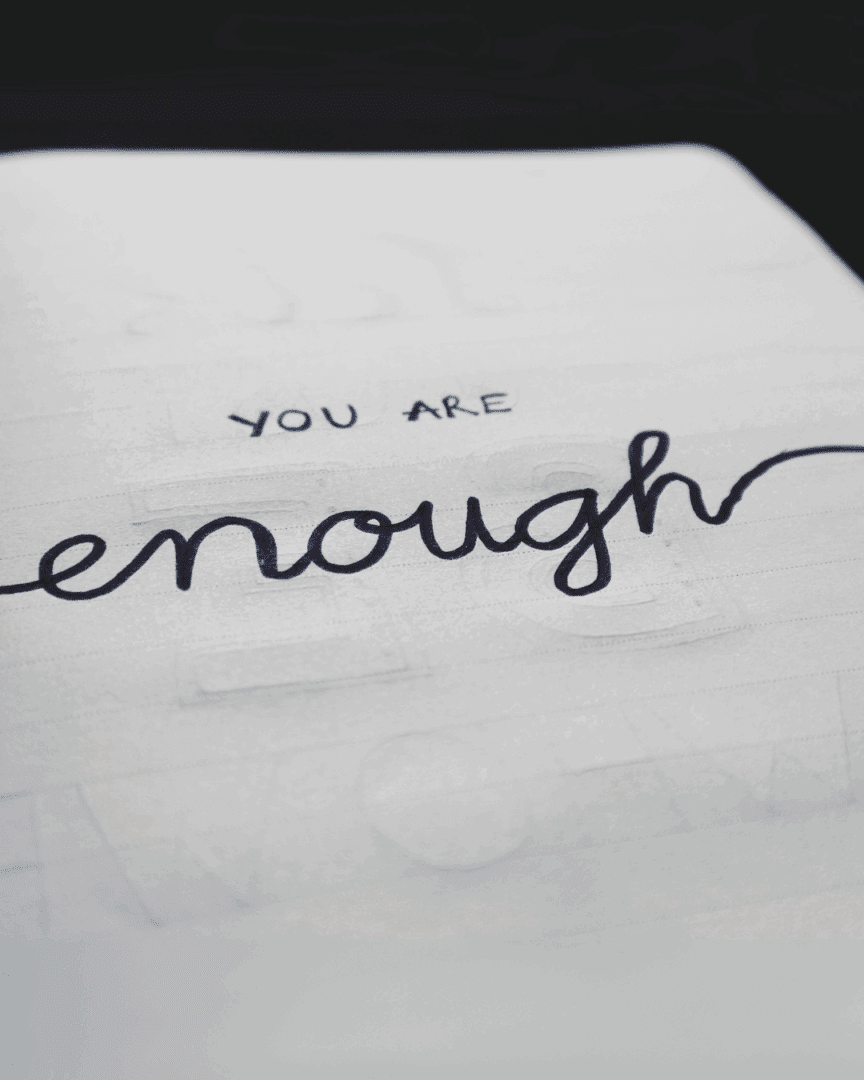
What to Do When “Enough” Doesn’t Feel Like Enough
There’s no quick fix here—but there is a path toward something gentler. It starts with disrupting the reflex, not just managing the outcome.
One way is to redefine what enough means on your own terms. Ask yourself: If I didn’t have to earn my worth, what would today’s success look like? You might be surprised by the softness in your answer.
Another step? Get curious about the voice in your head. Whose is it, really? A teacher? A parent? A past boss? Sometimes just naming the origin of that pressure can help loosen its grip.
You can also start checking in with your actual energy—not your calendar. Even if you could do more, do you need to? Does your body agree?
And most importantly, you don’t have to do this work alone. These aren’t just habits—they’re survival strategies. Therapy helps untangle where those beliefs come from and what kind of relationship you want with rest, effort, and self-worth moving forward.
Pull It All Together
That sense of “not doing enough” isn’t proof you’re slacking—it’s a sign you’ve been living with unrealistic expectations for too long.
You’ve been managing more than most people see. You show up, hold space, push through, and keep going… even when you’re bone-tired. The truth is, you’ve likely been doing too much for too long without feeling like it’s safe to stop.
You deserve to be supported, not just productive. And you deserve to rest without guilt.
Reflection Questions:
Where did you learn that doing more makes me more valuable?
Think about where this belief started. Was it a person, a pattern, a cultural message?
What does “enough” actually feel like in my body? (And when have I felt it?)
Instead of thinking your way through this, try remembering a moment when you felt content without pushing.
Ready to explore what your scrolling might be protecting you from?
If the pressure to do more has become a constant, quiet burden, therapy can help you unpack where that pressure comes from—and who you are without it.
At Simplicity Psychotherapy, we offer space to explore the weight of responsibility, perfectionism, and people-pleasing in a way that’s culturally grounded and emotionally safe.
📍 Serving Georgia, Florida, and Louisiana via secure telehealth.
Explore therapy options or book a consultation when you’re ready.

About the Author
Hi, I’m Rayvéne Whatley, a Licensed Professional Counselor practicing in Georgia, Louisiana, and Texas. I’m passionate about empowering people, especially Black men and women, to remove the mask of other people’s expectations and step into their authentic selves.
Much of my work focuses on addressing the impact of racial trauma on mental health. The intersection of identity, systemic stressors, and societal expectations can create layers of anxiety, self-doubt, and emotional pain. I help clients navigate these experiences by reexamining beliefs that no longer align with their goals and replacing them with ones that support their desires and values.
Through my writing, I aim to share insights and resources to help you better understand the connection between racial trauma and mental well-being, while offering tools to reclaim your peace and balance.
Whether you’re here for guidance, validation, or inspiration, I’m glad you’ve found this space.Healing isn’t always easy, but it’s worth it—and you don’t have to do it alone.